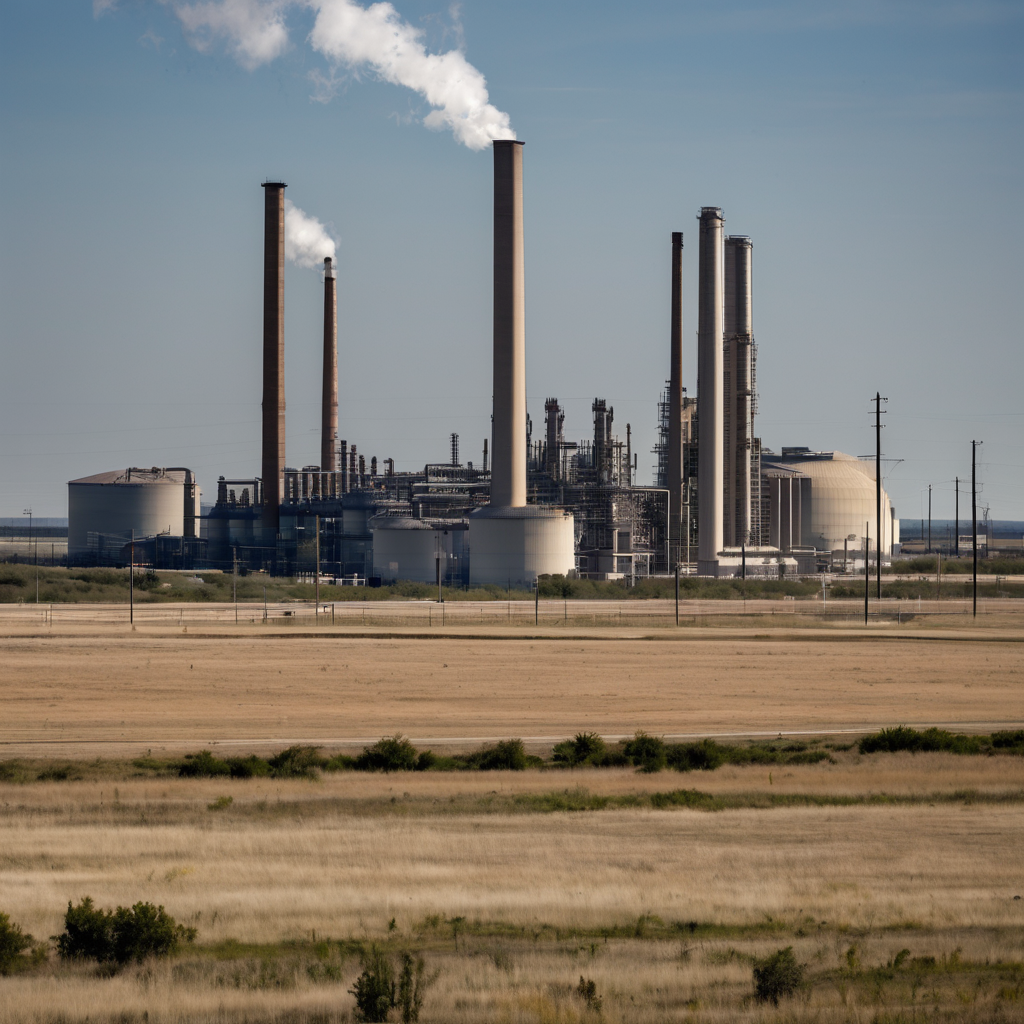
The artificial intelligence boom isn’t just reshaping Silicon Valley. It’s remaking rural America one hyperscale data center at a time.
Drive through parts of northern Virginia, central Texas, or eastern Oregon and you’ll find a new kind of industrial landscape emerging: vast concrete compounds, high-voltage substations, and transmission lines stretching across former farmland. These facilities don’t manufacture cars or steel. They manufacture computation. And increasingly, local governments are betting their economic future on them.
Data centers promise enormous tax revenue with relatively little strain on public services. In Loudoun County, the global epicenter of the data-center economy, the industry now generates nearly half of county tax revenue, helping fund schools, roads, parks, and public safety while keeping homeowner taxes comparatively low.
To local officials, it can feel like discovering oil beneath suburban office parks.
But there’s a deeper question lurking beneath the AI infrastructure boom: what happens when communities become economically dependent on facilities they neither fully control nor necessarily benefit from in the long run?
Why It Matters
That question matters because data centers occupy a strange position in the modern economy. They generate extraordinary wealth, but not always broad-based prosperity. Unlike factories or logistics hubs, they employ surprisingly few permanent workers once construction is complete. A billion-dollar facility may create thousands of temporary construction jobs, but once operational, settle into requiring just a few dozen full-time employees.
And yet the infrastructure demands are immense.
Data centers consume staggering amounts of electricity and increasingly require new transmission lines, substations, and power generation to support them. In many regions, utilities are now planning grid expansions primarily around projected AI demand growth rather than residential or industrial needs. Communities may enjoy lower taxes today, but they also inherit the long-term physical footprint of an energy-intensive digital economy.
That tradeoff is beginning to reshape local politics.
For years, places like Loudoun County embraced data centers with little hesitation. Officials streamlined permitting, expanded industrial zoning, and marketed themselves as “Data Center Alley.” Speed and predictability became competitive advantages in the race to attract cloud-computing giants.
Residents increasingly complain about the constant hum of cooling systems, the visual intrusion of warehouse-sized server farms, and the transformation of open land into industrial corridors. Activist groups opposing new data-center construction have proliferated nationwide, especially in Virginia, where voters have become markedly more skeptical of unchecked expansion.
The tension reveals something important about the AI economy: its physical infrastructure is impossible to hide.
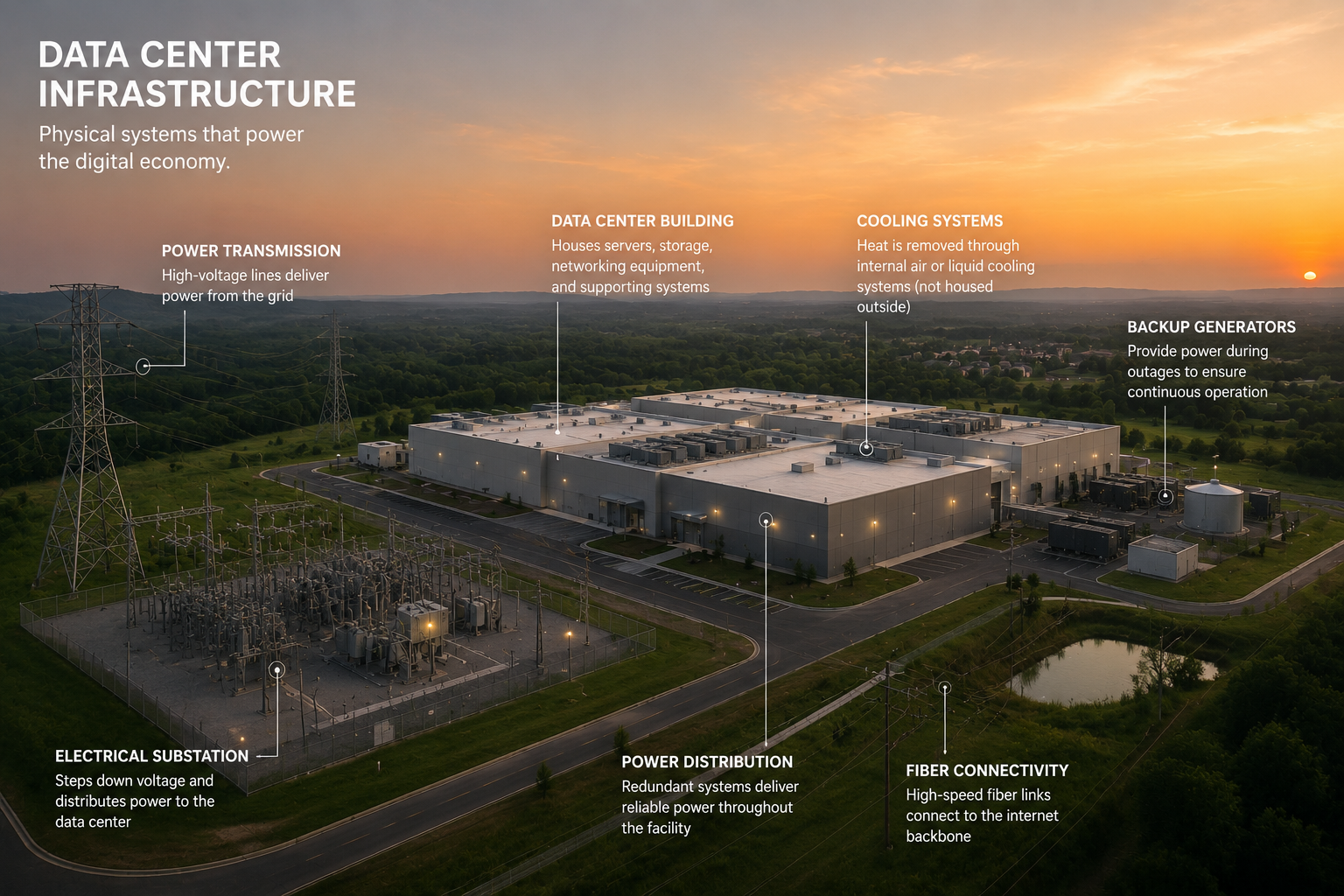
For years, the digital economy felt abstract—cloud computing sounded weightless, frictionless, almost environmental-free. But AI has shattered that illusion. Training large models requires enormous concentrations of electricity, cooling, land, and fiber connectivity. The “cloud” increasingly looks like power plants, transmission corridors, and industrial campuses spread across rural counties.
In some places, data-center developers are already moving farther from dense suburbs and cities, seeking jurisdictions with fewer political obstacles and cheaper land. Rural communities, eager for tax revenue and investment, are often willing to accommodate them.
That migration could fundamentally alter the geography of economic development in America.
The winners of the AI era may not just be software engineers in San Francisco or executives in Seattle. They may also be counties capable of delivering what hyperscalers value most: abundant power, permissive zoning, and fast approvals. But, dependence does carry risks.
When one industry becomes responsible for a massive share of local tax revenue, political leverage shifts. Communities may find themselves reluctant to impose restrictions or reject projects for fear of undermining their own fiscal stability. The relationship starts to resemble the classic company town. Except the company now builds server farms instead of steel mills.
None of this means data centers are inherently bad for communities. In many places, they’ve undeniably delivered economic gains, infrastructure upgrades, and construction employment. Loudoun County’s experience proves that digital infrastructure can generate enormous public revenue when governments position themselves to capture it.
But the AI boom is forcing America to confront a reality that the internet age long obscured: digital economies are still physical economies.
Every chatbot response, AI-generated image, and cloud-based workflow ultimately traces back to concrete buildings, massive power demand, and local political decisions about land and infrastructure. The future of artificial intelligence won’t just be debated in boardrooms and Congress. It will be negotiated at county zoning meetings, utility commissions, and rural planning boards across the country.
The next industrial revolution may arrive through fiber-optic cables. But it still needs somewhere to plug in.