

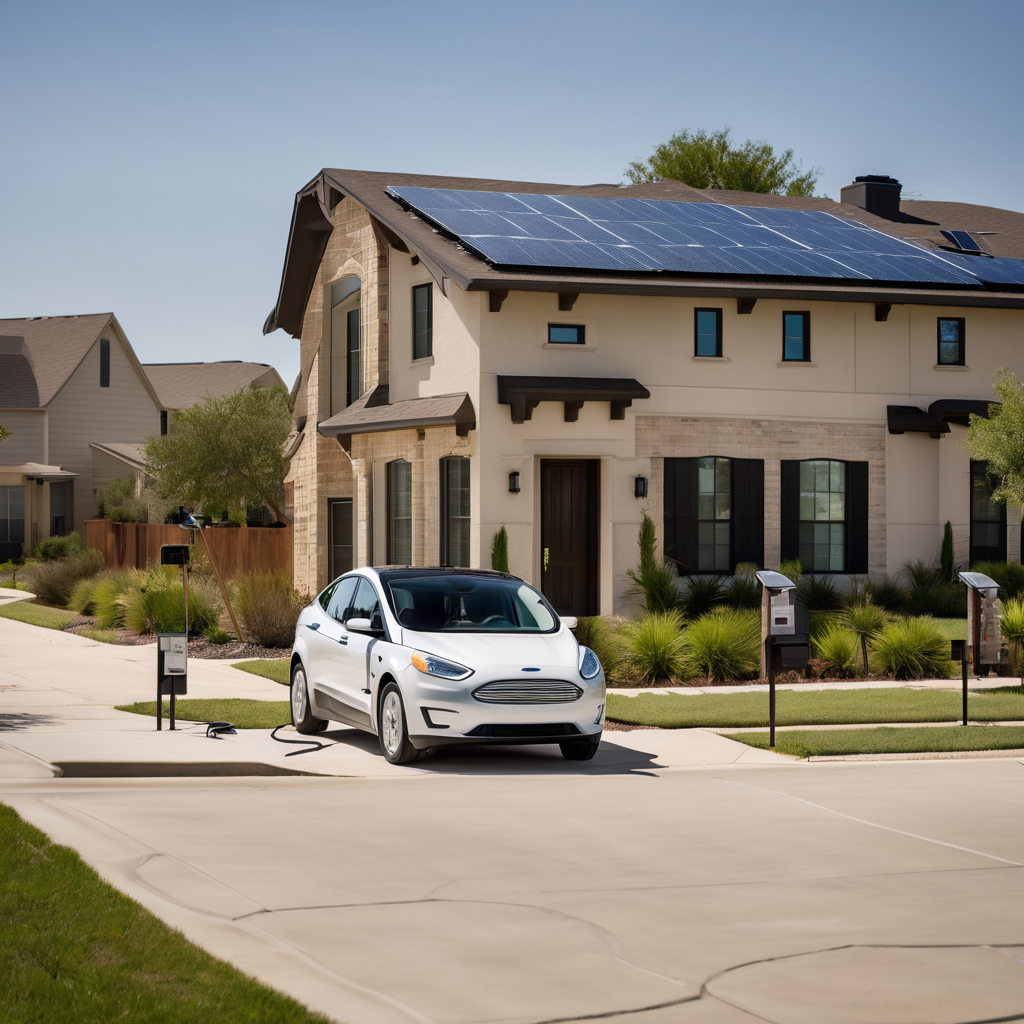
In the chess game of modern electricity markets, Ford just demonstrated a winning move that could change how we think about electric vehicle charging forever. The automaker's partnership with TXU Energy in Texas has shifted a staggering 515 MWh of energy consumption to off-peak periods in 2025 alone, equivalent to powering roughly 17,000 homes for a month.
The program works like a carefully orchestrated dance between supply and demand. Ford EV drivers in Texas receive 15 hours of "free" home charging daily under a special retail plan, but there's a catch: the charging happens when the grid needs it most, during off-peak hours when electricity is abundant and cheap.
The Economics Behind Smart Charging
This isn't just about giving drivers a break on their electricity bills—though that's certainly part of the appeal. The real genius lies in how the program transforms EVs from potential grid burdens into grid assets. During peak demand periods, when air conditioners are humming and industrial facilities are running at full capacity, EV charging takes a back seat. But when demand drops and renewable energy is flooding the grid, those same EVs become consumers of excess electricity.
ChargeScape CEO's assertion that this model could work in other competitive markets isn't just corporate optimism. It's based on fundamental economics. Every competitive electricity market faces the same challenge: matching supply with demand in real-time while keeping costs reasonable for consumers.
Why Texas Became the Testing Ground
Texas wasn't chosen randomly for this experiment. The state's deregulated electricity market creates the perfect laboratory for innovative pricing structures. Unlike regulated markets where utilities set fixed rates, Texas allows retail energy providers like TXU to craft creative pricing plans that reflect the true cost of electricity at different times.
The state's grid also presents unique challenges that make smart charging particularly valuable. Texas generates substantial wind power, especially at night when demand traditionally drops. Ford's program essentially creates a new category of flexible demand that can absorb this overnight renewable generation.
The Ripple Effect Across Competitive Markets
If ChargeScape's CEO is right about scalability, we could see similar programs emerge in other competitive markets like Pennsylvania, Illinois, and parts of the Northeast. Each market would need to adapt the model to local conditions. A wind-heavy market might emphasize overnight charging, while a solar-rich region could focus on midday periods when panels are producing excess power.
The key ingredient isn't the specific timing of the charging windows, but rather the dynamic pricing structure that rewards flexibility. This approach could prove especially valuable as more renewable energy comes online, creating greater variability in electricity supply throughout the day.
What This Means for Energy Consumers
For the average energy consumer, Ford's Texas experiment offers a glimpse into a future where electricity bills could become more predictable and potentially lower. When EV charging shifts to off-peak periods, it reduces strain on the grid during expensive peak hours, theoretically keeping rates lower for everyone.
But the implications extend beyond cost savings. This model demonstrates how consumer behavior can be gently guided through economic incentives rather than heavy-handed regulation. Drivers still get their cars charged and ready for the morning commute. They just don't have to think about when it happens.
The success of Ford's program in Texas proves that smart charging isn't just a theoretical concept. It's a practical solution that benefits drivers, utilities, and the broader energy system. As other competitive markets watch Texas lead the way, the question isn't whether similar programs will emerge elsewhere, but how quickly they can be adapted to local conditions. The future of EV charging may well be written in the Lone Star State's deregulated energy landscape.


