In the heart of Manhattan, where steam still rises from century-old pipes and subway grates, Con Edison is placing a $29 billion bet on the future. The utility that has powered New York City since Thomas Edison's day is embarking on its largest infrastructure overhaul ever, not because of flashy data centers or cryptocurrency mining, but because of something far more fundamental: New Yorkers are going electric.
Unlike other regions of the country where hyperscale data centers are driving explosive electricity demand, the New York metropolitan area faces a different challenge. Here, the electrification wave is coming from millions of apartment dwellers installing heat pumps, office buildings ditching gas boilers, and commuters trading subway cards for electric vehicle charging stations.
This gradual but inexorable shift represents a profound transformation for a grid that has evolved incrementally over more than a century. Con Edison's massive investment signals that even steady, predictable demand growth requires revolutionary infrastructure changes when it's happening across 10 million customers simultaneously.
The Quiet Revolution in Energy Demand
While headlines focus on AI-driven data center demand elsewhere, New York's energy story unfolds in apartment buildings and parking garages. Building electrification mandates are pushing property owners to replace gas heating systems with electric heat pumps. New York State's climate goals require steep reductions in building emissions, and electricity is the pathway.
Transportation electrification adds another layer. Though New York's extensive public transit system means fewer personal vehicles per capita than other major cities, the vehicles that do exist are increasingly electric. Each new EV charging station, each converted delivery truck, each electrified bus route adds incremental but persistent demand to a grid designed for different usage patterns.
"This isn't about sudden spikes in demand—it's about fundamentally changing how and when electricity flows through our system," explains a utility planning expert familiar with Con Edison's strategy.
The challenge isn't just quantity but timing and location. Electric heating creates winter peak demand that mirrors but doesn't perfectly align with traditional patterns. EV charging happens when people get home from work, not necessarily when the grid has spare capacity.
Infrastructure Reality Check
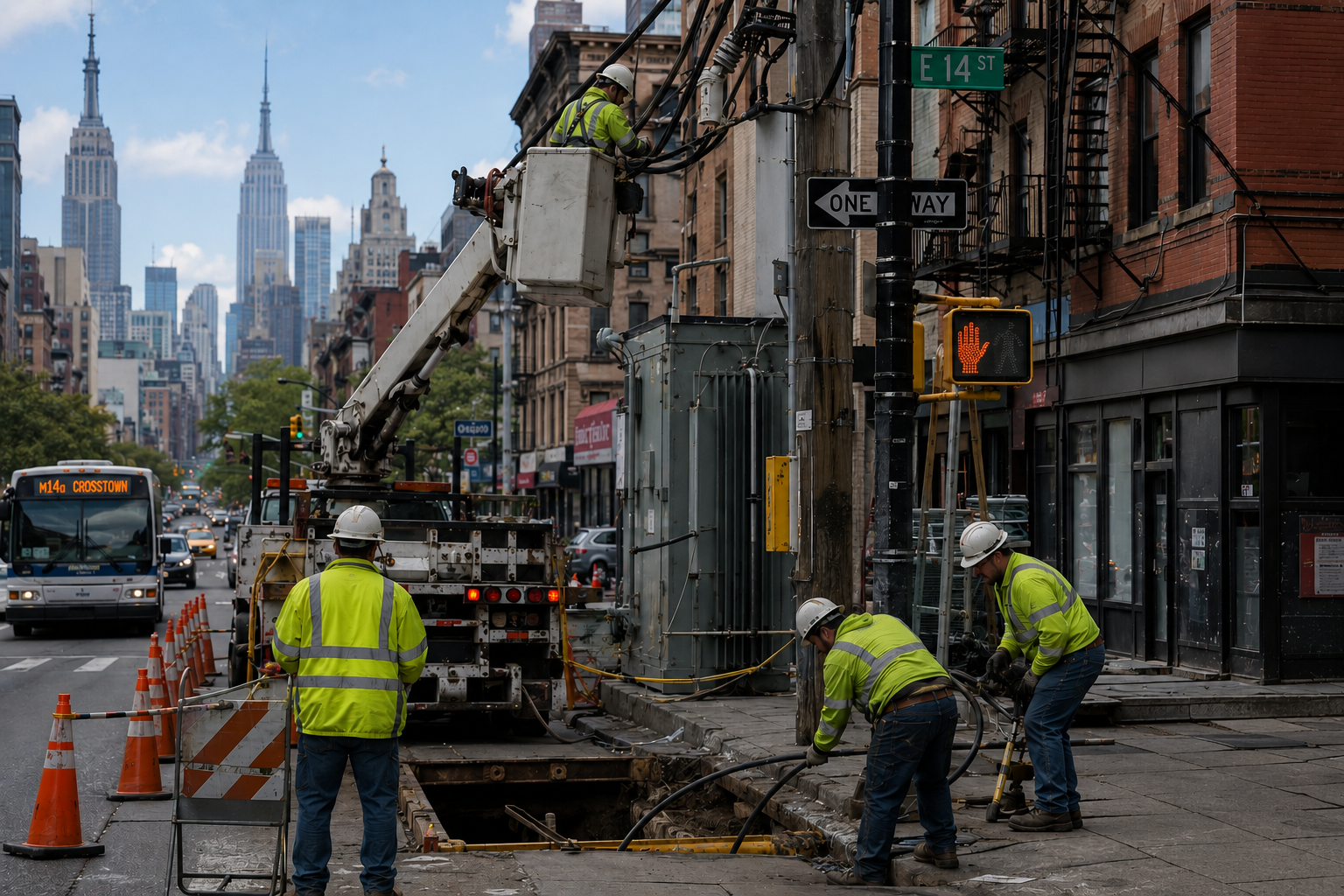
Con Edison's $29 billion commitment over the next several years represents more than money. It's acknowledgment that incremental upgrades won't suffice. The utility must rebuild substantial portions of its distribution system, upgrade substations, and install new transmission capacity.
Much of New York's electrical infrastructure dates to the post-World War II building boom. Transformers, cables, and switching equipment installed in the 1950s and 1960s were sized for the electrical loads of that era: lighting, air conditioning, and basic appliances. Today's all-electric buildings demand fundamentally different infrastructure.
The investment includes hardening against extreme weather—a necessity after Hurricane Sandy demonstrated the vulnerability of underground electrical systems. Climate change means more frequent and severe storms, even as electrification makes reliable power more critical for heating and transportation.
Why This Matters Beyond New York
Con Edison's massive infrastructure commitment offers a preview of what's coming nationwide. While data centers grab attention for their dramatic electricity demands, building and transportation electrification will ultimately drive far more widespread grid transformation.
Every major metropolitan area will face similar challenges as state and local climate policies push electrification. The difference is timing and scale. New York's aggressive climate goals and dense urban environment make it an early adopter, but the same dynamics will play out in cities across America over the next decade.
The financial implications extend beyond utility shareholders. Grid modernization costs ultimately flow to ratepayers through regulated utility rates. New York electricity customers are essentially funding a preview of America's energy transition...and paying premium prices for early adoption.
For energy consumers nationwide, Con Edison's experience will provide crucial lessons about managing electrification's infrastructure demands. Success in New York could accelerate similar transitions elsewhere. Failure would likely slow adoption and increase costs for everyone.
The $29 billion question isn't whether building and transportation electrification will happen—policy mandates and economics are driving that train. The question is whether America's utilities can build the infrastructure fast enough to keep the lights on during the transition. Con Edison's bet suggests that in the nation's largest city, at least one utility is taking that challenge seriously.