

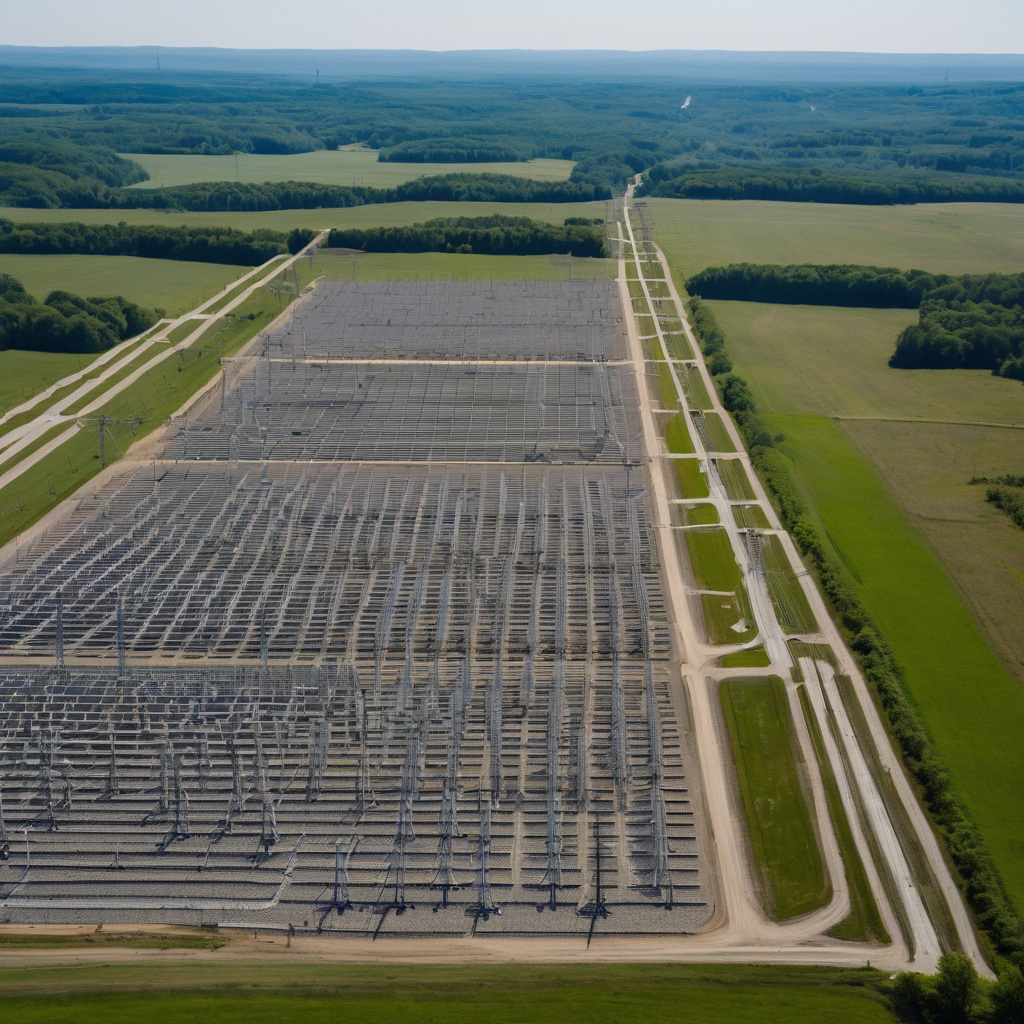
Imagine trying to conduct a symphony orchestra with musicians scattered across 13 states, each playing from different sheet music, while the audience demands perfect harmony. That's essentially the challenge facing PJM Interconnection, the nation's largest power grid operator, according to a sobering assessment from federal regulators.
The Federal Energy Regulatory Commission (FERC) has raised unprecedented concerns that PJM's vast network—stretching from Illinois to New Jersey and powering 65 million Americans—may have grown too large and complex to function effectively. It's a warning that strikes at the heart of how America manages its most critical infrastructure.
When Size Becomes a Liability
PJM operates like a massive electrical traffic controller, constantly balancing supply and demand across 13 states and the District of Columbia. But FERC commissioners suggest this sprawling territory has created what one regulator called "coordination challenges that may be insurmountable."
The grid's sheer scale means PJM must juggle wildly different energy landscapes simultaneously. Coal plants in West Virginia, nuclear facilities in Pennsylvania, offshore wind projects in New Jersey, and solar farms in Delaware all must work in perfect synchronization. When they don't, the consequences ripple across state lines.
The numbers tell the story: PJM manages over 84,000 miles of transmission lines, coordinates with more than 1,000 power plants, and oversees electricity markets worth billions of dollars annually. It's an operation that has grown organically over decades, absorbing smaller regional grids without necessarily considering whether bigger always means better.
The Reliability Reckoning

Recent grid stress events have exposed cracks in PJM's massive foundation. During Winter Storm Elliott in December 2022, the grid operator struggled to coordinate responses across its territory as power plants failed in frigid temperatures. The storm revealed how difficult it is to maintain real-time situational awareness across such a vast geographic area.
Some regulators and grid experts have warned that coordination challenges become more difficult as grid regions grow larger and more operationally complex.
The challenge isn't just technical. It's also political and economic. PJM must navigate 13 different state regulatory environments, each with distinct energy policies, economic priorities, and political pressures. What makes sense for manufacturing-heavy Ohio might conflict with the renewable energy goals of Maryland or the nuclear investments of Pennsylvania.
Market Mechanics Under Strain
PJM's electricity markets, once hailed as models of efficiency, now show signs of strain from their continental scale. The grid operator runs complex auctions for electricity capacity years in advance, trying to ensure adequate power supplies across its entire footprint. But coordinating these markets across such diverse economic and regulatory landscapes has become increasingly unwieldy.
Consider the challenge: PJM must simultaneously plan for Illinois's aggressive renewable energy mandates, Virginia's nuclear expansion, and West Virginia's coal plant retirements. Each state's decisions affect electricity prices and reliability across the entire 13-state region, creating a web of interdependencies that grows more complex each year.
The market complications extend beyond state borders. PJM's transmission planning process—determining where new power lines are needed—has become a years-long exercise involving hundreds of stakeholders across multiple states. Projects that might take two years to approve in smaller grid regions can languish for a decade in PJM's bureaucratic maze.
The Path Forward: Smaller Might Be Smarter

FERC's concerns point toward a potential restructuring of America's largest grid. Some experts suggest breaking PJM into smaller, more manageable regional operators—perhaps splitting along geographic or economic lines. The Mid-Atlantic states might form one grid region, while the Midwest states create another.
Such a restructuring wouldn't be unprecedented. Texas operates its own grid (ERCOT) covering most of the state, while California manages its grid through CAISO. Both demonstrate that smaller geographic footprints can enable more responsive, accountable grid management.
However, breaking up PJM would create its own challenges. The current system allows surplus wind power from Illinois to serve demand in New Jersey, or excess nuclear power from Pennsylvania to support Ohio's manufacturing. Smaller grids might lose these efficiency benefits, potentially raising costs for consumers.
What This Means for Your Electric Bill
For the 65 million Americans living in PJM territory, these regulatory concerns aren't academic. They directly affect reliability and costs. A grid that's too large to manage effectively means higher risks of blackouts, less efficient electricity markets, and potentially higher bills as coordination problems compound.
The reliability implications are particularly stark. When grid operators can't maintain real-time awareness across their territory, they tend to err on the side of caution—keeping more expensive backup power plants running "just in case." Those costs ultimately appear on monthly electricity bills.
Moreover, inefficient transmission planning means needed power lines don't get built, forcing electricity to travel longer, more expensive routes. Again, consumers pay the price through higher transmission charges embedded in their bills.
FERC's warning about PJM represents more than regulatory housekeeping—it's a fundamental question about how America organizes its most essential infrastructure. As the grid faces unprecedented challenges from climate change, renewable energy integration, and evolving demand patterns, the nation needs grid operators that are nimble, responsive, and accountable.
Whether that means breaking up PJM or fundamentally reforming how it operates remains an open question. But one thing is clear: the status quo of managing a 13-state electrical symphony is hitting discordant notes that regulators can no longer ignore. The reliability of America's power supply may depend on learning that sometimes, smaller orchestras play better music.


