The utility industry stands at a crossroads that will define the next decade of American energy infrastructure. On one side lies the seductive promise of fully automated systems—AI-powered grids that predict, prevent, and repair themselves without human intervention. On the other side sits a more nuanced reality: artificial intelligence works best when it amplifies human expertise rather than replacing it entirely.
This isn't just a philosophical debate about the future of work. In an era where reliability indices directly shape regulatory ratings and customer trust, utilities are discovering that the most successful AI implementations treat technology as a sophisticated partner, not a replacement for seasoned operators.
The Partnership Paradigm Shift
Think of AI in utilities like a GPS system for your car. The technology can calculate optimal routes, predict traffic patterns, and suggest alternatives. But, you still need to keep your hands on the wheel and eyes on the road. The GPS doesn't replace your driving skills; it enhances your ability to navigate efficiently.
This partnership model is revolutionizing how utilities approach everything from predictive maintenance to demand forecasting. Instead of asking "How can AI automate this process?" forward-thinking utilities are asking "How can AI help our experts make better decisions faster?"
The distinction matters enormously. When AI systems operate in isolation, they can miss context that experienced operators instinctively understand—like the subtle signs that indicate a transformer is stressed beyond what sensor data alone might suggest. But when AI provides sophisticated analysis to human experts, the combination becomes exponentially more powerful than either element alone.
Why Human Expertise Remains Irreplaceable
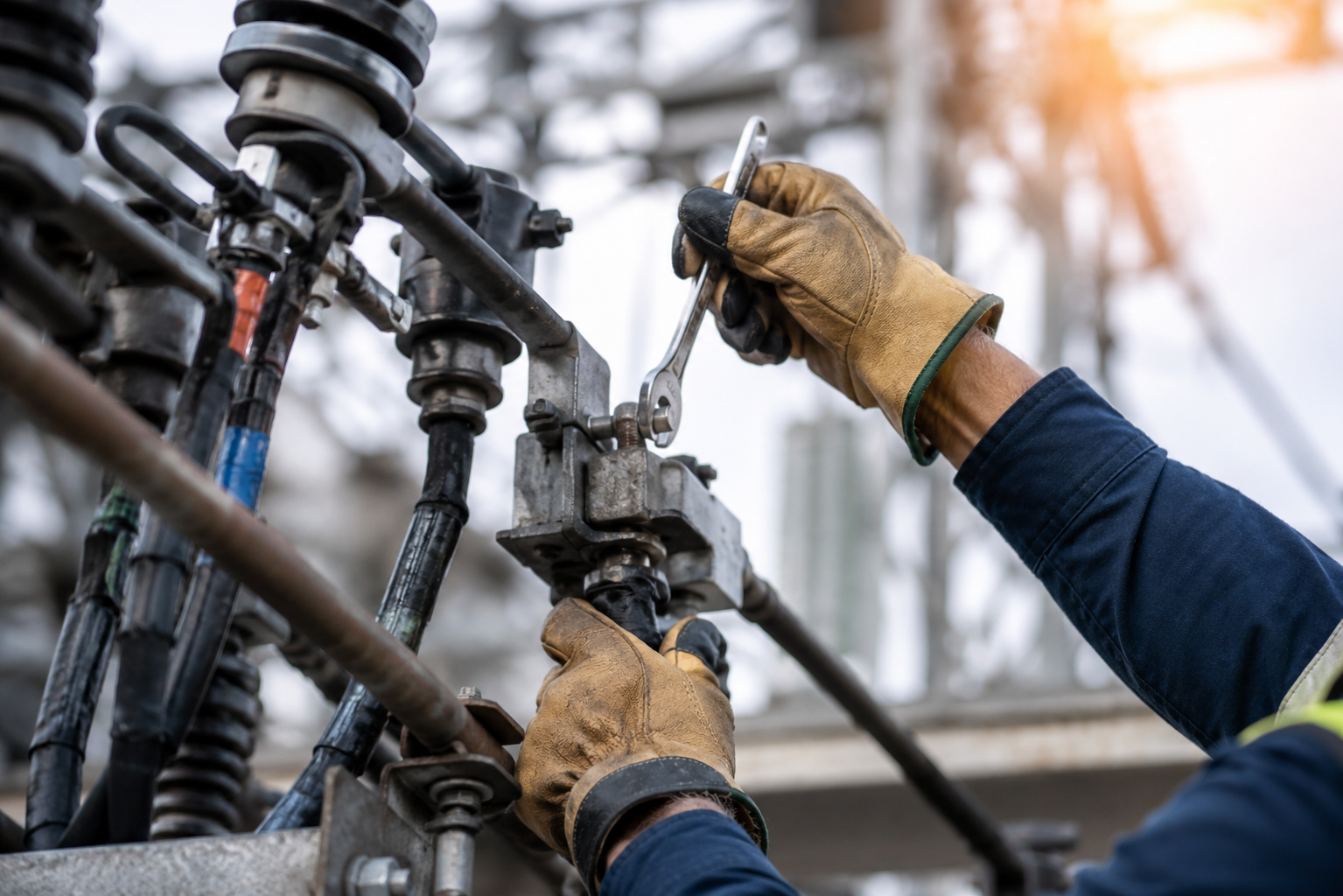
Energy systems are inherently complex, with countless variables that can interact in unexpected ways. Weather patterns, equipment aging, regulatory changes, and consumer behavior all influence grid operations in ways that can't always be captured in training data.
Human operators bring three critical capabilities that AI currently cannot replicate:
- Contextual judgment: The ability to recognize when current conditions fall outside historical patterns
- Stakeholder communication: Managing relationships with regulators, customers, and communities during outages or emergencies
- Ethical decision-making: Balancing competing priorities like cost, reliability, and environmental impact
Consider what happens during a major storm. AI systems can predict likely failure points and optimize restoration sequences, but human coordinators must balance technical efficiency with community needs—prioritizing hospitals and emergency services, communicating with frustrated customers, and making real-time adjustments as conditions change. The most successful AI implementations treat technology as a sophisticated partner, not a replacement for seasoned operators.
Measurable Returns from AI Partnership
The partnership approach isn't just philosophically appealing because it delivers concrete results. Utilities implementing collaborative AI systems are seeing significant improvements in key performance metrics:
Predictive maintenance programs that combine AI analysis with technician expertise are reducing unplanned outages by 15-25% while extending equipment life. The AI identifies patterns in sensor data that might indicate impending failures, while experienced technicians provide context about equipment history and operating conditions.
Demand forecasting accuracy has improved by 20-30% when AI models incorporate input from local operators who understand regional patterns and customer behavior. The technology processes vast amounts of historical data, while humans provide insights about local events, economic changes, and seasonal variations that might not be captured in the data.
Emergency response coordination has become dramatically more effective when AI-powered decision support systems work alongside experienced dispatchers. Response times have decreased while customer satisfaction has increased, as human coordinators can focus on communication and strategic decisions while AI handles routine optimization tasks.
Building Effective Human-AI Teams

Successfully implementing AI partnerships requires more than just deploying new software. Utilities must invest in training programs that help operators understand AI capabilities and limitations. This means teaching technicians how to interpret AI recommendations, when to trust automated suggestions, and how to provide feedback that improves system performance over time.
The most successful programs create feedback loops where human expertise continuously improves AI performance. When an operator overrides an AI recommendation—and that decision proves correct—the system learns from that input. This collaborative learning process creates AI systems that become more valuable over time, rather than static tools that gradually become obsolete.
Training programs should focus on three key areas:
- Understanding AI decision-making processes and confidence levels
- Recognizing when AI recommendations require human judgment
- Providing structured feedback to improve system performance
When AI provides sophisticated analysis to human experts, the combination becomes exponentially more powerful than either element alone.
The Competitive Advantage of Partnership
As regulatory pressure increases and customer expectations rise, utilities that master human-AI collaboration will gain significant competitive advantages. They'll respond faster to outages, predict problems before they occur, and optimize operations more effectively than utilities that rely on either pure automation or traditional manual processes.
This partnership approach also addresses one of the biggest concerns about AI implementation: job displacement. Rather than eliminating positions, successful AI partnerships create opportunities for workers to focus on higher-value activities that require human judgment, creativity, and relationship management.
The utilities that thrive in the next decade won't be those with the most advanced AI systems. They'll be the ones that most effectively combine artificial intelligence with human expertise. In an industry where reliability isn't just a metric but a public trust, the partnership model offers the best path forward for delivering the safe, reliable, and efficient energy systems that communities depend on.