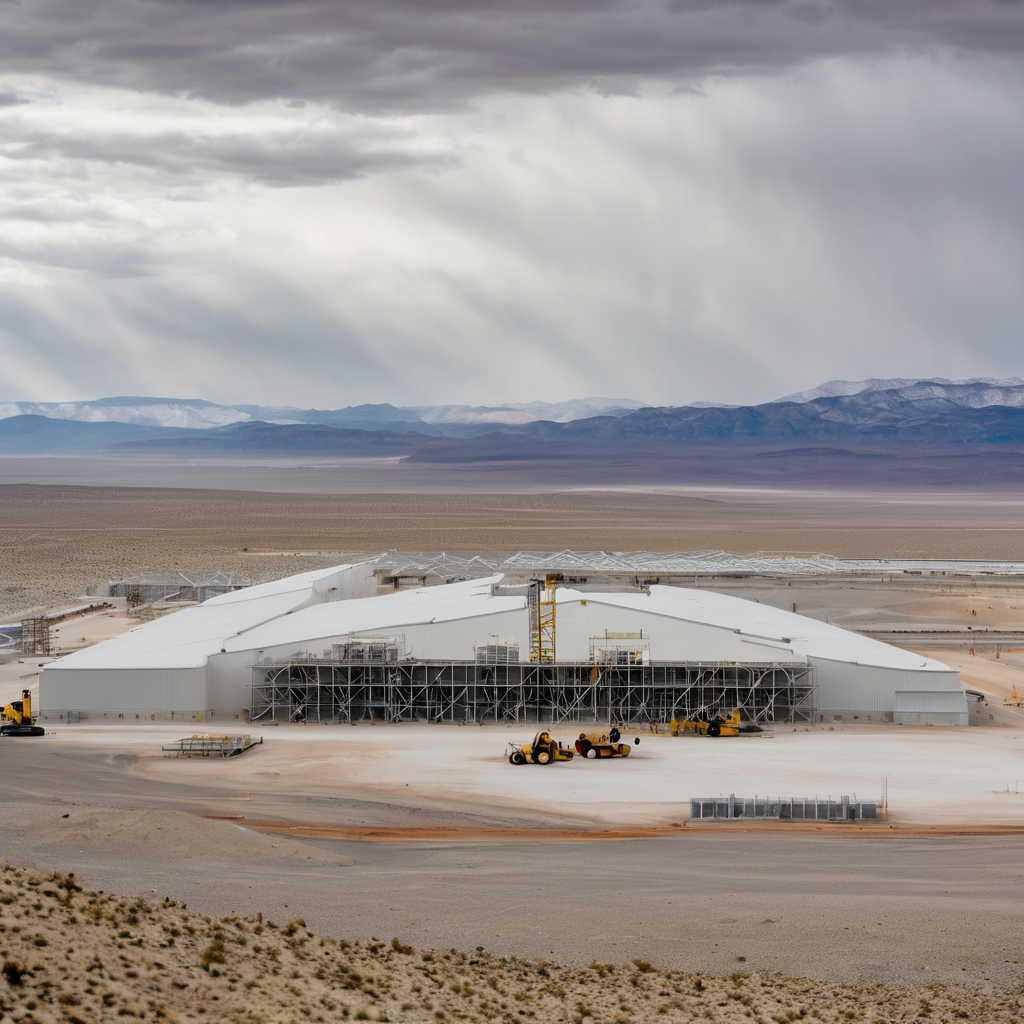
In a rare reversal that underscores the evolving approach to critical mineral independence, the Department of Energy has reinstated a $57 million grant to American Battery Technology Company after the Nevada-based firm successfully appealed its cancellation last year.
The decision breathes new life into plans for a $115 million lithium refinery that could help reduce America's dependence on Chinese-controlled supply chains. For energy consumers, this represents more than just another industrial project. It's a potential pathway to more stable battery prices and secure domestic energy storage capacity.
The Grant That Almost Wasn't
American Battery Technology's journey with federal funding reads like a cautionary tale about the complexities of government-industry partnerships in the energy transition. The original grant cancellation left the company scrambling to secure alternative financing for its ambitious lithium processing facility, which aims to extract the critical mineral from both recycled batteries and domestic mining operations.
The reversal suggests the DOE recognized the strategic importance of keeping such projects on American soil and building the infrastructure needed to support clean energy goals without relying on geopolitically sensitive supply chains.
Why Domestic Lithium Processing Matters
Think of lithium as the crude oil of the clean energy economy—except instead of powering combustion engines, it enables the batteries that store renewable energy and power electric vehicles. Currently, China dominates lithium processing, controlling roughly 60% of global refining capacity despite holding only a fraction of raw lithium reserves.
American Battery Technology's facility represents an attempt to change that equation. By processing lithium domestically, the company could help insulate American manufacturers from supply chain disruptions and price volatility that have plagued the battery industry.
The strategic importance of domestic lithium processing extends far beyond industrial policy—it's about energy security in an electrified economy.
The Ripple Effects for Energy Consumers
While the immediate impact on consumer energy bills may be minimal, the long-term implications are significant. Domestic lithium processing capacity could help stabilize battery costs, making everything from electric vehicles to home energy storage systems more predictable in price.
More importantly, it reduces the risk of supply chain disruptions that could slow the deployment of renewable energy infrastructure. When solar and wind farms can't secure reliable battery storage, it limits their ability to provide consistent power, which ultimately affecting grid stability and energy costs.
The DOE's decision to reinstate funding also signals renewed federal commitment to building out the entire battery supply chain domestically, from raw material processing to cell manufacturing. This comprehensive approach could accelerate the timeline for achieving true energy independence in the electric age.