


A utility contractor in Conover, North Carolina, just put 105 new jobs on the table, and most of them come with a wiring diagram attached.
What happened
Kevin Ellis reported for Business North Carolina on October 14 that Utili-Serve, a utility infrastructure company headquartered in Conover since 2008, will invest $24.8 million to expand its headquarters and build a 25,000 square foot manufacturing facility, adding 105 jobs in Catawba County. Governor Josh Stein's office announced the expansion the same day.
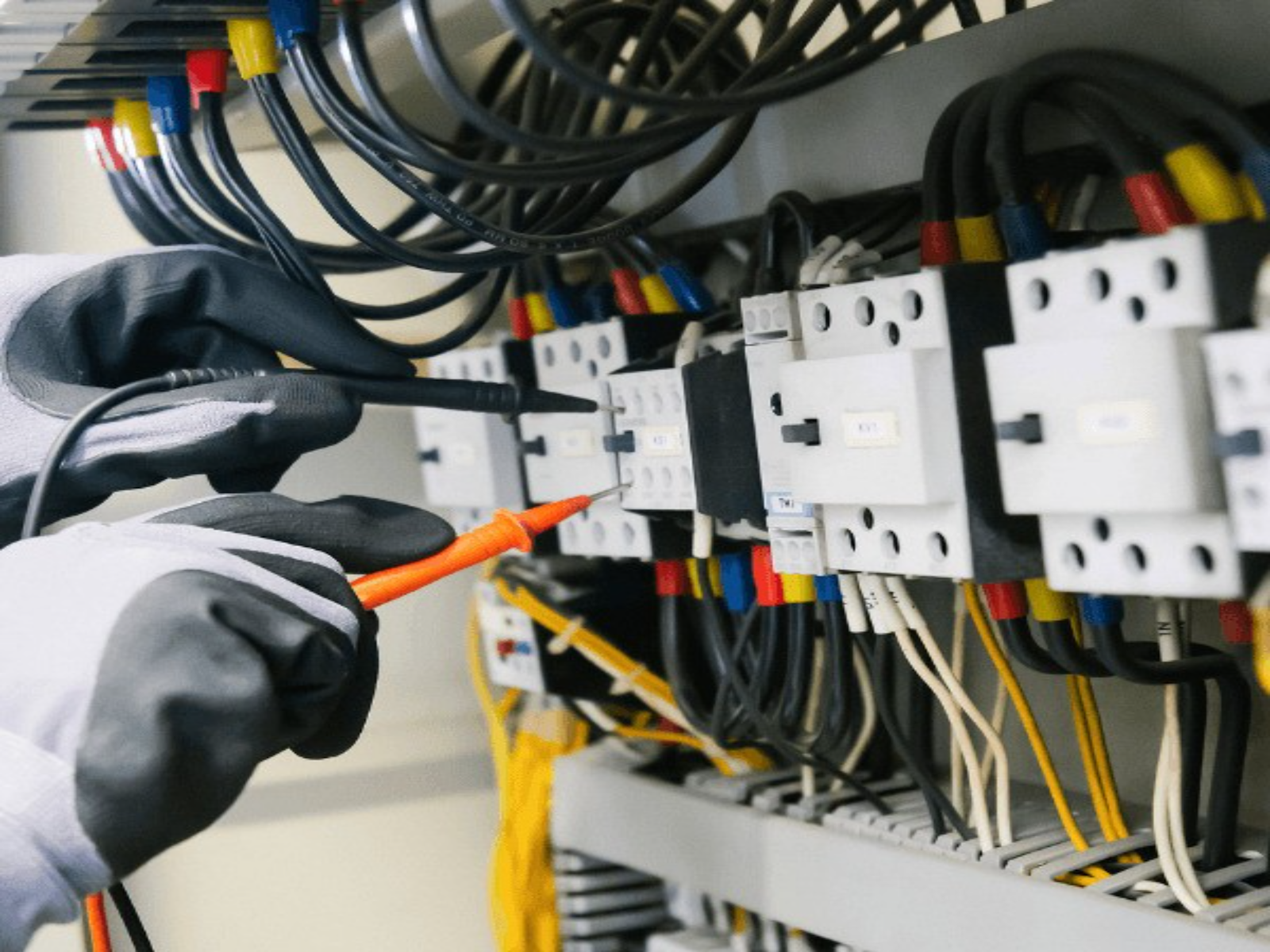
The new building becomes a regional hub for project management, manufacturing and logistics, and it brings two product lines home to Conover: field control panels and protective relay panels. A protective relay panel is the cabinet of relays, switches and hand wired terminal blocks that watches a substation and tells a breaker to open in a fraction of a second when a line faults, so one bad moment on one circuit does not travel down the street.
Utili-Serve is not a startup. It employs more than 360 people, keeps offices in Raleigh and in Greenville, South Carolina, runs 30 construction crews across the Southeast, and says it has finished more than 10,000 substation projects. The work list reads like the back half of the grid: substation construction and maintenance, transformer and apparatus service, protective relay panel manufacturing, installation and commissioning, and general construction. The state's announcement is specific that the expansion brings field control and protective relay panel manufacturing to Conover, which means the panel gets designed, built and tested in the same county the installing crew is dispatched from.
"Conover is our home. Since 2008, we have connected North Carolina and the southeastern United States to power." Ben Dietrich, president of Utili-Serve
Why it counts
Start with the pay, because that is what the jobs actually do for Catawba County. The state puts the average salary for the new positions at $62,400, against a county average of $56,937, and estimates the expansion adds close to $6.6 million a year in payroll. Those roles are not all engineers. They run from project management and design through panel assembly and field commissioning, which is the part where a technician stands in front of the finished cabinet with a test set and proves every relay does what the drawing says it will.
That skill is the real bottleneck right now, and it is worth being plain about why. Duke Energy's Carolinas resource plan, reported by Robert Walton at Utility Dive in August, recommends roughly 18.5 GW of solar, 14 GW of gas, 13 GW of storage and about 4.5 GW of new nuclear in the Carolinas through 2041, with the winter peak forecast to climb more than 10 GW, or about 30 percent. A resource plan is simply a utility's long range shopping list for generation and grid, filed with state regulators who decide what gets approved. Every megawatt on that list eventually lands on a concrete pad behind a fence and talks to the rest of the system through a substation. Somebody has to build the substation. Somebody has to wire the panel that protects it.
Duke Energy was listed among the partners on the Conover announcement, alongside Catawba County, the City of Conover, the Economic Development Partnership of North Carolina, the North Carolina Community College System and Catawba Valley Community College. That partner list is the tell. The utility is the anchor customer here, and it has been seeding the same labor pool from the other end: in April, the Duke Energy Foundation put $600,000 into North Carolina workforce training, including $500,000 split among 20 community colleges at $25,000 each for linework, electrical systems, welding, HVAC and advanced manufacturing. Kendal Bowman, Duke Energy's North Carolina president, called the community college investment critical as the industry and the state meet what she described as a growth moment.
The numbers
- 105 new jobs in Conover, Catawba County, per Business North Carolina and the governor's office.
- $24.8 million invested in the headquarters expansion and the new 25,000 square foot manufacturing building.
- $62,400 average salary for the new roles, about 10 percent above the Catawba County average of $56,937.
- Close to $6.6 million in new annual payroll for the region, by the state's estimate.
- More than 360 people employed today, with 30 construction crews working across the Southeast.
- More than 10,000 substation projects completed since 2008.
- $250,000 performance based grant from the One North Carolina Fund, paid only after the company hits its job and investment targets, and contingent on a local government match.
What comes next
Neither the company nor the state published a hiring calendar, so the honest answer is that the building comes first and the headcount follows it. The incentive is structured the same way. The One North Carolina Fund grant is performance-based, which means the $250,000 is not a check written up front, it is money released after Utili-Serve proves the jobs and the capital are real, and local government has to match it.
Three things are worth watching from here. The first is whether panel assembly in Conover turns into a trained local pipeline rather than a recruiting problem, which is exactly what Catawba Valley Community College is on that partner list to solve. The second is crew count. Thirty crews is a real field organization, and crews are how a company like this scales with utility capital plans rather than lagging behind them. The third is reach. The company has said the expansion supports utility scale grid projects along the East Coast, which means a Catawba County factory floor would be shipping protection and control into states well beyond the Carolinas.
The Bottom Line
One hundred and five jobs will not move a state unemployment number. That is not the reason to pay attention to Conover. The reason is that the Carolinas have committed to a very large amount of new generation and new grid over the next 15 years, and the limiting factor on that kind of program is rarely the equipment order. It is whether there are enough people who can build a substation, wire the panel that protects it, and stand there at two in the morning while it is energized for the first time.
Utili-Serve has been doing that work out of Conover for 18 years. What changed this week is that the company decided the next decade of it should be built in the same town, by 105 more people, at wages above what the county pays on average. That is a small headline and a durable one. Grid buildout gets written about in gigawatts. It gets delivered in crews.
Sources: Kevin Ellis, Business North Carolina, "Utili-Serve to add 105 jobs in Catawba County expansion," October 14, 2026; Office of Governor Josh Stein, "Governor Stein Announces 105 New Jobs as Utility Manufacturer Expands Catawba County Operations to a Regional Hub," October 14, 2026; WFAE, "Infrastructure manufacturing company expands in Catawba Co.," October 14, 2026; Robert Walton, Utility Dive, "Duke's Carolinas resource plan," August 20, 2026; Duke Energy, "Duke Energy invests $600,000 to train North Carolina's future energy workforce," April 14, 2026.


