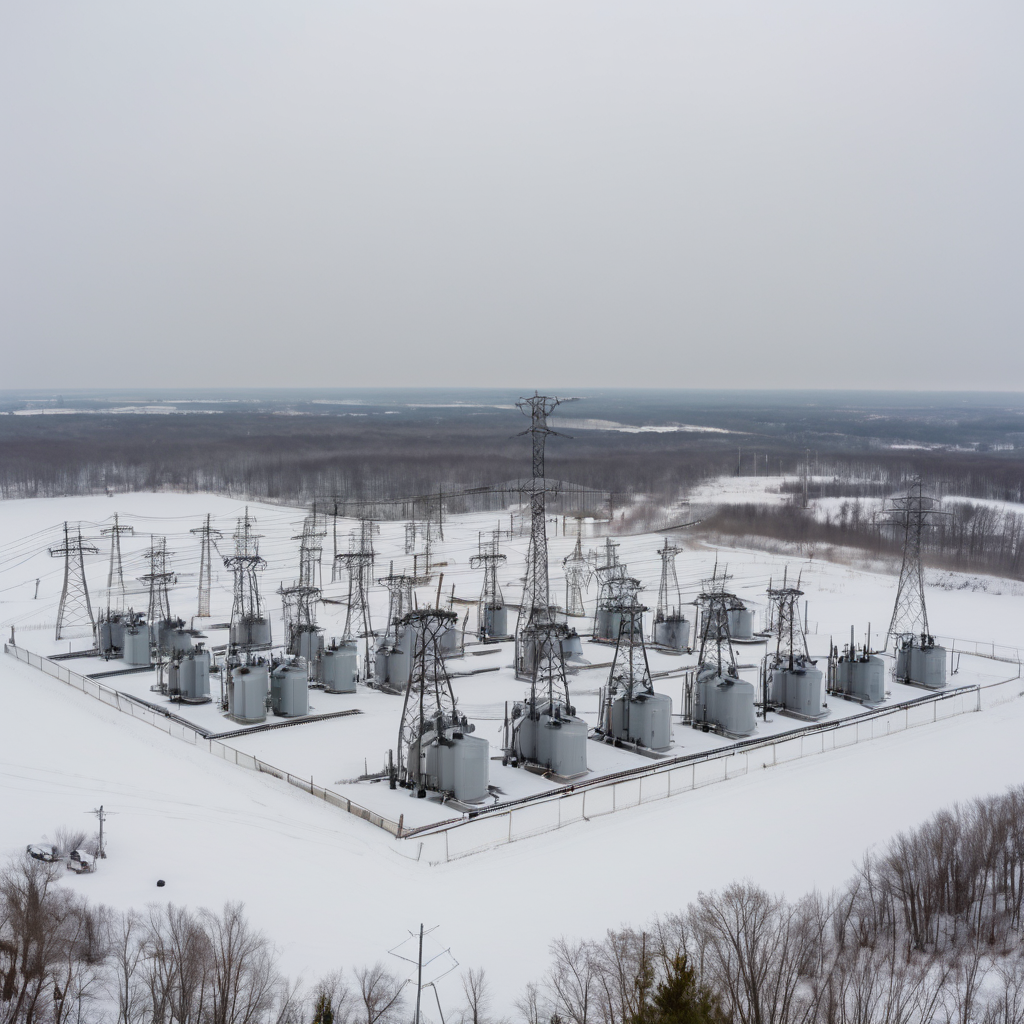
Picture the electrical grid as a highway system built for the traffic of yesterday, now facing a rush hour it was never designed to handle. That's the challenge facing Consolidated Edison, the utility powering New York City and Westchester County, as electric vehicles, heat pumps, and induction stoves flood onto circuits that have hummed along largely unchanged for decades. ConEd's answer, announced last week, is as ambitious as it is necessary: 28 new substations by 2035.
This isn't a modest tune-up. It's a fundamental re-engineering of the arteries that deliver power to millions of homes and businesses, timed to align with New York's aggressive climate mandates that push residents and companies alike toward electrification.
Why Substations Are the Grid's Unsung Heroes
If power plants are the heart of the electrical system, substations are its pressure valves and traffic controllers. They take high-voltage electricity zipping through transmission lines and step it down to levels safe for homes and office buildings. Without enough of them, in the right places, even abundant power generation can't reach the outlets where it's needed.
ConEd's territory has a substation problem hiding in plain sight: much of its infrastructure was built for a 20th-century city of gas furnaces and gasoline engines. As New York residents swap oil boilers for heat pumps and gas-powered sedans for EVs, the electrical load on local circuits is climbing in ways that decades-old substations simply weren't built to absorb.
Electrification isn't just a policy goal anymore — it's a daily reality straining infrastructure built for a different energy era.
The 28 planned substations represent ConEd's attempt to get ahead of that curve rather than react to it, part of a broader capital investment strategy the company frames as essential to supporting both New York City's and New York State's climate targets, including mandates that push toward economy-wide decarbonization by mid-century.
What This Means for Your Electric Bill and Your Block

Here's why this matters beyond the utility boardroom: grid upgrades of this scale are rarely invisible to ratepayers. Substation construction is capital-intensive, and utilities typically recover those costs through rate cases, meaning New Yorkers may eventually see the investment reflected on their monthly bills.
But the alternative carries its own cost. An under-built grid means brownouts, delayed EV charger installations, and bottlenecks that slow the very electrification the city is counting on to hit its climate goals. Think of it like plumbing in an old apartment building: you can install as many new faucets as you want, but if the pipes can't handle the pressure, nothing improves.
- More substations mean greater capacity for EV charging infrastructure to expand without local grid constraints
- Enhanced reliability could reduce the frequency of localized outages during peak demand, like summer heat waves
- Strategic placement will likely prioritize neighborhoods with the fastest-growing electrification demand
A Bellwether for Utilities Nationwide
ConEd's plan lands as a signal flare for utilities across the country watching electrification accelerate faster than infrastructure planning cycles typically allow. New York's climate law, one of the most aggressive in the nation, is forcing ConEd's hand now — but similar pressures are building in California, Massachusetts, and other states with ambitious decarbonization timelines.
The company's willingness to commit to a specific number — 28 — by a specific deadline — 2035 — offers a rare, concrete benchmark in an industry often criticized for vague, long-horizon promises. Whether ConEd hits that mark will become a closely watched test case for whether utility infrastructure can actually keep pace with electrification policy, or whether the grid remains the quiet bottleneck holding back the clean energy transition.
For now, ConEd is placing a bet that building capacity ahead of demand beats scrambling to catch up. In a city where the next decade will bring millions of new electric vehicles, appliances, and heating systems onto the grid, that bet may prove to be the difference between a smooth transition and a grid that buckles under its own ambitions.