


Thomson, Georgia had a 138,000 square foot finishing plant with working coating lines and nobody on them.
What happened
Mayville Engineering Company, a publicly traded contract metal fabricator headquartered in Milwaukee, closed on that plant on October 1 and plans to hire roughly 140 people in McDuffie County. Andrew Weiland reported the purchase for BizTimes Milwaukee the day the deal closed, and the jobs figure came from Governor Brian Kemp’s office and the Georgia Department of Economic Development that same week.
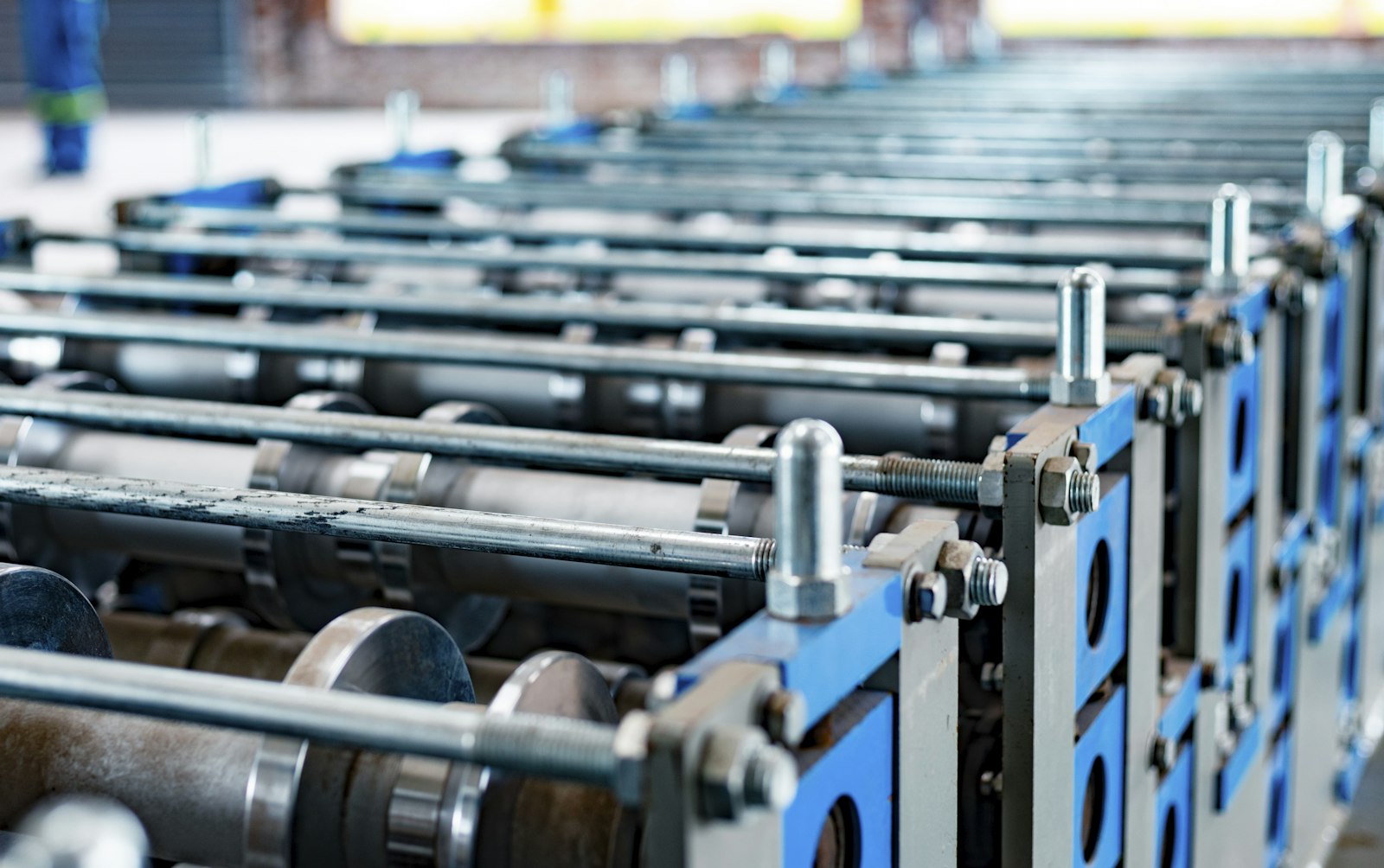
MEC bought a working plant rather than a shell. The site came with e-coating and powder coating lines and on site wastewater treatment, which is the expensive, permit-heavy part of any metal finishing operation. The company plans to spend $25 million to $30 million, phased through 2028, to turn it into a full fabrication and finishing site: cutting, forming, welding, coating and assembly under one roof. Georgia becomes MEC’s tenth state of operation, and the Thomson plant joins a footprint of 28 facilities, 23 of them currently in use.
The reason is on the customer list. MEC fabricates for what it calls its Datacenter and Critical Power end market. In plain terms, that's the steel around the electricity: the enclosures and cabinets that house switchgear, the skids and frames that generators and uninterruptible power supplies bolt onto, the housings that get powder coated so they hold up for a decade sitting outdoors beside a substation. None of it ships itself. Somebody runs the press brake, somebody welds the frame, somebody hangs the part on the paint line and somebody checks the tolerance before it goes on a truck.
“Demand from our Datacenter and Critical Power customers is currently on track to outpace our available capacity, and this location gives us the platform to grow alongside where our customers are investing,” said Jag Reddy, MEC’s president and chief executive.

Why it counts
The 140 jobs are not one job repeated 140 times. The state’s announcement lists management, administrative, technical, machine operator, maintenance and quality control roles, which is a ladder rather than a line. Somebody can start on an operator shift and move into maintenance or quality without leaving the building, and the training side has a named partner: Georgia Quick Start, the state’s customized workforce training program run through the technical college system, is listed on the project alongside the Thomson-McDuffie Industrial Development Authority, the McDuffie County Development Authority and the Augusta Economic Development Authority.
Timing matters as much as the count. Because the building and the coating lines already exist, MEC says workforce expansion begins in 2026 rather than after a multi-year greenfield build. A lot of economic development announcements are a promise about 2029. This one has shifts in it this year.
It also puts east central Georgia on the supply side of the data center buildout instead of only the receiving end of it. Load growth gets written about in megawatts. It arrives as parts, and parts come from shops.
The numbers
Every figure here comes from MEC’s own announcement, the state of Georgia, or Georgia Power’s resource plan filing.
- 138,000 square feet in Thomson, McDuffie County, with the deal closing October 1, 2026.
- $25 million to $30 million of investment, phased through 2028, covering purchase and improvements. The state’s announcement put the estimate at $26 million.
- About 140 new jobs, with workforce expansion starting in 2026.
- About $50 million of annual revenue capacity when the site is fully deployed, lifting MEC’s total revenue capacity beyond roughly $850 million.
- More than $125 million of qualified pipeline in data center and critical power work, and about $90 million of new project awards booked in the first half of 2026.
- Georgia is MEC’s tenth state of operation, following the company’s 2025 acquisition of Accu-Fab.
What comes next
MEC expects revenue contribution to begin in 2027 and build as capabilities are commissioned through 2028, which means hiring ramps with the equipment. The first postings read like an operator and maintenance story well before they read like a management one.
The demand signal behind all of it sits with the regulator, not with the fabricator. In July 2025, the Georgia Public Service Commission approved Georgia Power’s long range resource plan, which the utility built around 8,500 megawatts of projected load growth over six years. The same plan carried more than 1,500 megawatts of battery storage, a ten year transmission program touching more than 1,000 miles of line, up to 4,000 megawatts of new renewable resources by 2035, and uprates adding 54 megawatts at Plant Vogtle Units 1 and 2. A resource plan, for anyone who has never read one, is the multi-year shopping list a utility files and a commission approves before anything gets built.
Every line on that list is steel, copper and labor before it is a megawatt. A meaningful share of the steel gets cut, bent and coated in buildings like the one on Superior Way.
The Bottom Line
A Wisconsin company bought a Georgia building because its order book outran its floor space, and 140 people in McDuffie County get work out of it. Hiring starts this year, the state picks up the training, and a county that has mostly read about the power buildout now has a seat in its supply chain. That is what load growth looks like by the time it reaches a shop floor.
Sources: Andrew Weiland, BizTimes Milwaukee | Mayville Engineering Company, footprint expansion announcement | Office of Governor Brian Kemp and the Georgia Department of Economic Development, via AllOnGeorgia | Plant Services | Trade and Industry Development | Georgia Power


