


Wayne County knew it only as Project Pioneer, and as Aynaelyssya Thomas-Frunk reported in the Goldsboro News-Argus, it turned out to be a battery plant rather than the data center everyone had penciled in.
What happened
Duke Energy told the Wayne County Board of Commissioners on Tuesday, November 17, that it plans to build two lithium-ion battery storage systems beside its existing H.F. Lee natural gas plant in Goldsboro. Mark Pope, president of the North Carolina Global TransPark Economic Development Region, walked the board through the details.
H.F. Lee Battery Storage 1 is a 260 megawatt system scheduled to begin operating in the fall of 2028. H.F. Lee Battery Storage 2 adds another 150 megawatts and is due online before the end of that year. At 410 megawatts combined, Goldsboro becomes the largest battery installation anywhere on Duke Energy's system. Southern Business & Development put the company's commitment at up to $756 million.
The line that matters most to anyone who owns a tool belt is the start date. Construction is expected to begin in early 2027. Contractors get named and crews get staffed months ahead of a dirt date, so the hiring calls and apprentice slots tied to this job get sorted during 2026.

Both systems will use four hour lithium-ion batteries manufactured in North America. Four hour is the useful detail: a fully charged system can push its rated output onto the grid for four straight hours before it has to recharge, which is exactly the window that matters on the hottest August afternoon and the coldest January morning.
Nine permanent full-time positions will run the finished site and support other battery and solar resources around the region, at an estimated annual wage of $85,000, Pope told the commissioners.
Wayne County was not the only name on the list. Duke Energy also looked at sites in South Carolina, Florida, Kentucky, Indiana and Ohio before choosing Goldsboro, where it has operated for decades and is now the county's largest taxpayer.
Why it counts
Nine permanent jobs is a small number on its own. The employment story here is the build, and the build is a good deal bigger than the headcount that stays behind.
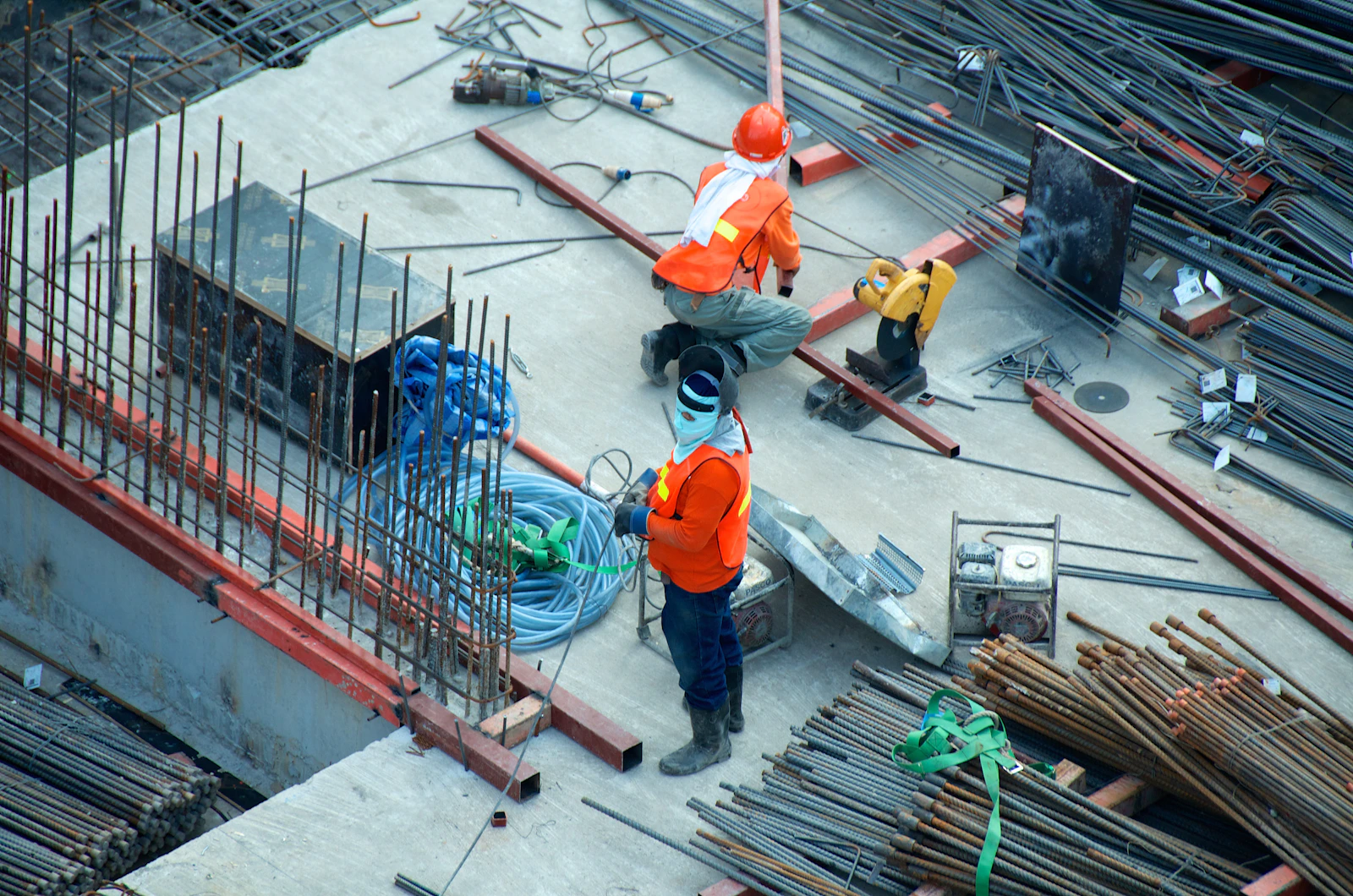
Grid batteries are electrician heavy work. Somebody pours and cures the foundations, sets and anchors the enclosures, pulls and terminates thousands of feet of cable, lands the medium voltage switchgear, wires the protection and control panels, then tests and commissions the whole thing before it is allowed to talk to the grid. That is concrete finishers, ironworkers, operating engineers, electricians and testing technicians, all concentrated into a short and intense window on a single site.
These are also trades a person can enter without a four year degree. The Bureau of Labor Statistics puts the 2025 median pay for electricians at $63,190 a year, or $30.38 an hour, across about 821,000 jobs, and projects the occupation to grow 9 percent between 2025 and 2035, which it classes as much faster than average, for roughly 75,900 additional jobs. Power plant operators, distributors and dispatchers, the people who eventually sit at the controls of a site like H.F. Lee, had a 2025 median of $105,080 a year. The typical entry level education for both is a high school diploma.
And this is not a one off job. Duke Energy's 2025 Carolinas Resource Plan anticipates 6,540 megawatts of battery storage by 2035. The company operates 308 megawatts across 14 battery facilities in North Carolina today, with the largest, in Knightdale, at 100 megawatts. Going from 308 megawatts to 6,540 means building roughly twenty one times the current fleet inside a decade, and every megawatt of it has to be put in the ground by somebody.
"We're building new resources to keep the Carolinas' economy thriving, while reinvesting in our existing power plant communities that have powered North Carolina and South Carolina for decades."
That is Kendal Bowman, Duke Energy's North Carolina president. The reinvestment part is the piece worth sitting with. Goldsboro already has a power plant workforce and a power plant tax base, and the new work is landing on that same ground rather than starting from scratch somewhere else.
The numbers
- 410 megawatts of combined battery capacity, split 260 and 150 across two systems
- Up to $756 million in investment
- Four hours of rated output per full charge, with batteries manufactured in North America
- Construction beginning in early 2027, both systems in service by the end of 2028
- Nine permanent full-time jobs at an estimated $85,000 a year
- 308 megawatts across 14 North Carolina battery sites today, the largest being 100 megawatts in Knightdale
- 6,540 megawatts of storage anticipated by 2035 under the 2025 Carolinas Resource Plan
- About $2 million a year in additional county property tax revenue, on top of roughly $5.8 million Duke Energy already pays in Wayne County
What comes next
Watch three things. First, the contractor awards. A 410 megawatt build split across two systems is large enough to pull in a serious electrical contractor alongside a civil contractor, and whoever wins the work will be hiring in eastern North Carolina rather than importing an entire workforce from out of state.
Second, the training pipeline. The people doing that hiring will be looking for licensed electricians and testing technicians in 2027, and a start date that specific is about the clearest signal an eighteen year old in Wayne County is going to get about what to do next.
Third, the next announcement. Duke Energy's own plan points to roughly 5,800 more megawatts of storage beyond today's fleet and this project, which means other power plant towns across the Carolinas are candidates for the same conversation Wayne County just had.
The Bottom Line
The headline number is nine jobs. The working number is the hundreds of tradespeople who will spend 2027 and 2028 turning 410 megawatts of batteries into a functioning piece of the Carolinas grid, on a site that has been making power for a long time already. Goldsboro kept its power plant community and added a construction program on top of it. That is what reinvestment in an existing plant town looks like in practice, and it starts with a shovel in early 2027.
Positive Current
Sources: Aynaelyssya Thomas-Frunk, "Project Pioneer revealed as Duke Energy facility," Goldsboro News-Argus, November 19, 2026; "Duke Energy Announces Plans for Largest Battery Storage Facility on Its System in Wayne County," Goldsboro Daily News, November 18, 2026; "Around the South: November 21, 2026," Southern Business & Development; U.S. Bureau of Labor Statistics, Occupational Outlook Handbook, Electricians; U.S. Bureau of Labor Statistics, Occupational Outlook Handbook, Power Plant Operators, Distributors, and Dispatchers.


